What ALFA does is not a simple technical or operational optimization.
ALFA redefines the very nature of the project before it even enters the classic EPCF cycle.
That means we add a meta-layer of thinking that redefines:
“The R.E.P.C.F model developed by ALFA has been formally presented and registered, through multiple official papers, with international institutions and recognized authorities. Any use, reproduction, adaptation, or conceptual redesign of this model without prior written authorization from ALFA is subject to legal action before competent national and international bodies.”
ALFA, Relying on think-tank intelligence and its proprietary R.E.P.C.F model, ALFA redefines the problem before solving it, gives meaning to design before drawing it, and architects the future of the project before building it. In this world, a project is not merely constructed—it becomes possible, intelligent, sustainable, and future-driven.
ALFA, introduces a new universe of projects—a universe where risk is eliminated, economics are rewritten, design becomes engineered, procurement becomes value-based, and construction becomes the command center of the project. ALFA is not just a model for building a project; it is the framework for building the future of a project—a gate through which projects pass to reach a new destiny.
Why EPCF is incomplete – and why ALFA goes beyond it
liquam eget pharetra libero. Vivamus nec velit suscipit, finibus lorem non, condimentum mauris.
- Engineering
- Procurement
- Construction
- Finance
Duis aute irure dolor in reprehenderit in voluptate velit esse cillum dolore eu fugiat nulla pariatur.
But ALFA:
- Revisits and questions the project definition
- Redesigns the use, purpose, path, financial model and operating model
- Gives the project a new identity
- Moves the target point of the project
- Builds the strategy of the project before it is born
This creates an upstream stage that must happen even before Engineering. This is a Pre-EPCF Strategic Reframing.
Strategic Planning (SP)
In some infrastructure projects, strategic analysis is done before design.
This approach has a partial resemblance to parts of ALFA’s structure – but it is nowhere near enough.
FEED (Front-End Engineering Design)
In oil and gas, FEED happens before Engineering.
But it is still mostly engineering-focused and does not redefine the strategy and economic model of the project.
Value Engineering (VE)
VE is about cost–function optimization.
ALFA goes far, far beyond a simple VE approach.
Pre-Development Strategy
Used in real estate and development projects, but it does not have the power to radically redefine the strategic nature of the project.
Conclusion:
There is currently no global, formal structure that is as upstream and as comprehensive as the one ALFA designs and executes.
ALFA therefore has the legitimacy to create a new standard..






RE-DEFINITION
The R stage is the point where the ALFA universe begins.
At this stage, the project is redefined before it is designed, and made possible before it is built.
R is not a preface, not a prerequisite, and not a brainstorming meeting.
This stage creates the very nature of the project.
EPCF, as used globally, has always assumed that a project begins with Engineering.
But ALFA says:
“A project begins when the problem is correctly defined –
and that definition must start with redefining the world of the project.”
This simple yet revolutionary sentence is the heart of R.
A major share of projects starts from the wrong question.
ALFA says: as long as the question is wrong, even the best teams will never produce the right answer.
Stage R does this:
- rewrites the questions
- reconstructs the core problem
- challenges the “initial definition” provided by the client, government, organization or public perception
- redesigns the structure of the problem itself
Result?
The project is elevated from “problem solving” to “creating the right problem.”
A major share of projects starts from the wrong question.
ALFA says: as long as the question is wrong,
even the best teams will never produce the right answer.
Stage R does this:
- rewrites the questions
- reconstructs the core problem
- challenges the “initial definition” provided by the client, government, organization or public perception
- redesigns the structure of the problem itself
Result?
The project is elevated from “problem solving” to “creating the right problem.”
No project happens in a vacuum. Every project is part of a real network of:
- assets
- regulations
- city
- economy
- financial flows
- politics
- geography
- society
- the future of the region
- the future of the land
- investment behavior
- migration patterns
- technological change
- competitors
- and the project’s platform position
In Stage R, the project is redefined inside this network. he project is no longer seen only as an act of building, but as an ecosystemic intervention.
This is radically different from classical models.
In R:
- financial resources are redefined from scratch
- hidden values are revealed
- raw assets are turned into productive ones
- land becomes capital
- capital becomes possibility
- possibility becomes project
- and the project becomes a platform for subsequent projects
Here, R does what no engineering or design model can do:
R makes the project possible.
In the classic model, Design = the answer.
In ALFA’s model, Design = Stage Three.
Stage One is the creation of possibility.
In Stage R, ALFA answers a key question:
“If we start this project today with its current definition, where will we be 10 years from now?
And if we change the project definition, how will the future path shift?”
This future-focused view ensures that:
- the cost trajectory changes
- the revenue trajectory changes
- the asset trajectory changes
- the growth trajectory changes
- the value-creation trajectory changes
- and the social impact trajectory changes
R is not “drawing plans” – R is designing the future.
The biggest industry mistake:
“The client says what they want, and the consultant designs exactly that.”
There is no guarantee the client has actually asked for
what they should be asking for.
In R, ALFA says:
“We design what the problem really needs, not what the client claims in the moment.”
Result?
The project shifts from demand-driven to problem-driven.
In this stage, ALFA does something that exists in no other global model:
We ask questions like:
- Does this project truly deserve to be built?
- Or should a completely different project be built instead?
- Should the land’s use be changed?
- Should this project be merged with another?
- Should two projects be integrated into one?
- Should the project be defined as a platform for future development?
- Should it be redirected toward higher value-added outcomes?
- Should surrounding assets be activated?
- Should the revenue model be transformed?
- Should the project actors themselves be changed?
This is engineering possibility – beyond the scope of any conventional consultant, engineer or architect.
R means: building platforms (Platformization of Projects)
ALFA does not see a project as a “single event”.
ALFA sees the project as a platform for future projects:
- each project becomes the platform for the next
- each plot of land becomes the platform for a larger development
- each action becomes the platform for new value creation
- each collaboration becomes the platform for future partnerships
This view transforms the project from “building one thing” into “building a chain.”
This only happens in Stage R.
In R we ask:
“What is this project really being created for?”
And often it becomes clear that:
- the real mission is something else
- the core purpose lies somewhere else
- the original problem was wrongly defined
- and the true path lies in a different direction
R discovers the true mission of the project – and then everything else aligns with it.
A large part of a project’s value is not in structures and drawings,
but in things people usually don’t see:
- location
- timing
- networks
- access
- relationships
- surrounding land
- traffic flow
- people flow
- capital flow
- liquidity
- and future value-added potential
Stage R surfaces these values
and builds the project on top of them.
When the definition is wrong, everything else moves in low capacity:
- wrong drawings
- wrong contractors
- wrong costs
- wrong schedule
- wrong standards
- wrong equipment
- wrong financial model
But when, in R,
a precise definition is created,
50 other decisions simply never need to be made.
This is a massive saving in time, money, energy and risk.
This is a key sentence in the ALFA model.
In R we design:
- the project environment
- the economy
- regulations
- the future of the land
- the future of the region
- stakeholders
- relationships
- development trajectory
- platform position
- financial flows
- and new possibilities
In reality, the project is redesigned inside its full context.
R is Loop Zero – but the core of the model
Although R is the “first stage” in appearance,
it is actually the core of the entire system.
- Engineering without R is like surgery without diagnosis.
- Procurement without R is like buying without a plan.
- Construction without R is like building without direction.
- Finance without R is like investing without a model.
R is the foundation of all four subsequent stages.
Outputs of Stage R
At the end of R, ALFA delivers a complete set of strategic outputs.
The outputs of R are the inputs to all later stages.
By the end of R, ALFA produces:
- ✔ A new problem definition
- ✔ A final, clarified project definition
- ✔ A redesigned economic model
- ✔ A revenue and value-creation model
- ✔ An asset model
- ✔ A future model of the project
- ✔ A possibility architecture
- ✔ A full ecosystem map of the project
- ✔ Strategic definitions
- ✔ Design directions (input to E)
- ✔ A financial architecture (input to F)
R is not the end; it is the beginning of engineering.
In reality, the project only becomes truly designable from this point onwards.
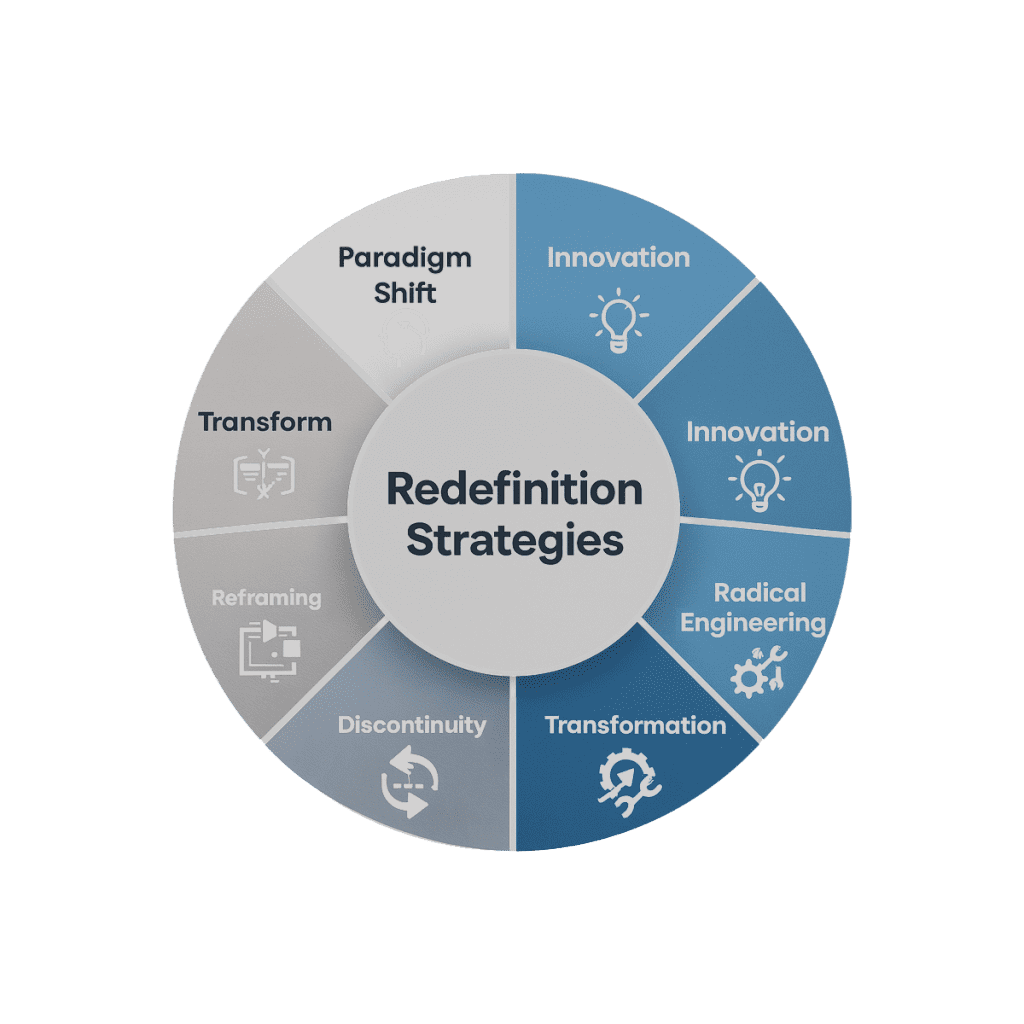
Stage R in ALFA’s REPCF model is the radical process of redefining the project before design begins: a stage where the problem, economics, assets, future, ecosystem and project value are all rewritten. This stage not only guarantees project feasibility – it changes its destiny and its value.
R is what differentiates ALFA from every classical model in the world.
ENGINEERING
Engineering as the architecture of reason, possibility and future
“Engineering begins only when the problem has been correctly defined.”
In the REPCF model, Engineering is not the starting point.
It is the logical and inevitable continuation of Stage R.
In this view, design and calculation only have true engineering value when they are built on:
- a correct definition
- a valid economic model
- and a sound worldview of the project
This means ALFA sees engineering not as a technique,
but as the result of a strategic definition.
Engineering in ALFA evolves from “blind design” to “truth-based design.”
Large-scale projects are complex, multi-layered, full of tensions and paradoxes.
Traditional engineering often tries to:
- ignore complexity
- oversimplify
- or constrain it away
Engineering in ALFA does the opposite:
- it understands complexity
- models it
- and then shapes a designed, engineered and executable order from within it
For mega-projects, this is vital:
Managing complexity = managing not to fail.
In ALFA, Engineering is far more than producing drawings.
Design is defined as Decision Architecture.
Every line, every dimension, every space and every technical choice is the result of an informed decision that has already been tested in R from the perspectives of:
- economics
- strategy
- future readiness
- and value creation
This type of design is neither decorative nor passive.
It is active, rational, future-oriented and deeply purposeful.
Good design without precise calculation is a disaster.
Precise calculation without design insight is lifeless and useless.
In ALFA Engineering, these two meet.
Every millimeter is chosen with mathematical reasoning.
Every engineering decision is justified with human understanding and deep experience.
This combination is what saves large projects from collapse.
In ALFA’s model, engineering is not merely a technical activity;
it is the most powerful risk management tool.
Correct design, before construction, will:
- reduce cost risk
- manage time risk
- control technical risk
- and minimize future risk
Engineering here means eliminating dozens of mistakes before a single one has the chance to appear.
Engineering in ALFA is not design that begins at operation.
It is design that begins with the future.
Key questions:
- What will this structure be in 20 years?
- What role will this building play then?
- How will this city change?
- How will needs evolve?
- How can this project remain predictable and upgradeable?
ALFA Engineering always designs the project to be:
- scalable
- extendable
- and future-ready.
The output of R is a definition.
The output of E is a world.
In ALFA Engineering, everything discovered in R—
the economic model, hidden values, future scenarios, assets, regional context, networks, risks—
is translated into a designed, buildable structure.
Engineering is the phase that makes reality executable.
In high-level projects:
- architecture cannot be separated from structure
- structure cannot be separated from economics
- economics cannot be separated from functional efficiency
In ALFA’s model, engineering is the integration of these worlds.
It is the process where art, technique, management, economics and future all operate as one coherent system.
This kind of engineering is not “design” –
it is command of design.
At the end of Engineering, ALFA delivers:
- complete architecture
- structural and MEP systems
- BIM and Digital Twin
- calculations
- technical documentation
- construction pathways
- quality control strategies
- economic performance indicators
- and the project’s operational model
But beyond all of this:
Engineering outputs a state in which the project is buildable, real, sustainable and controllable.
Engineering is the point where the redefined idea from R
marries the real world.
The philosophical and strategic decisions of R become:
- volume
- zoning
- structure
- systems
- flows
- performance
- and material
Definition becomes physical reality.
The biggest weakness in many projects is that engineering does not recognize that:
- every project has a DNA
- every project has a personality
- every project has an inner truth
In ALFA, engineering first understands the DNA of the project –
then translates it into space and matter.
If architecture is the architecture of space,
engineering is the architecture of action.
It determines:
- what will be built
- how it will be built
- when it will be built
- through which mechanisms
- and at what level of quality
Engineering writes the operation blueprint.
This is ALFA’s core value.
Engineering that simply “gets something built” is not enough.
Engineering must be:
- correct
- future-making
- economical
- safe
- sustainable
- and expandable
Final summary: ALFA Engineering is intelligent design in the service of reality.
Engineering in the REPCF model is a blend of:
- science
- experience
- economics
- art
- future-readiness
- and executability
Engineering becomes a language – the language of transforming what is into what should be.
In this model, engineering is not the arm of design or a subset of architecture.
It is the phase that converts definition into a world.
Design in ALFA is not a product; it is a decision-making system
In ALFA, Engineering is far more than producing drawings.
Design is defined as Decision Architecture.
Every line, every dimension, every space and every technical choice is the result of an informed decision that has already been tested in R from the perspectives of:
- economics
- strategy
- future readiness
- and value creation
This type of design is neither decorative nor passive.
It is active, rational, future-oriented and deeply purposeful.
Final summary: ALFA Engineering is intelligent design in the service of reality.
Engineering in the REPCF model is a blend of:
- science
- experience
- economics
- art
- future-readiness
- and executability
Engineering becomes a language – the language of transforming what is into what should be.
In this model, engineering is not the arm of design or a subset of architecture.
It is the phase that converts definition into a world.
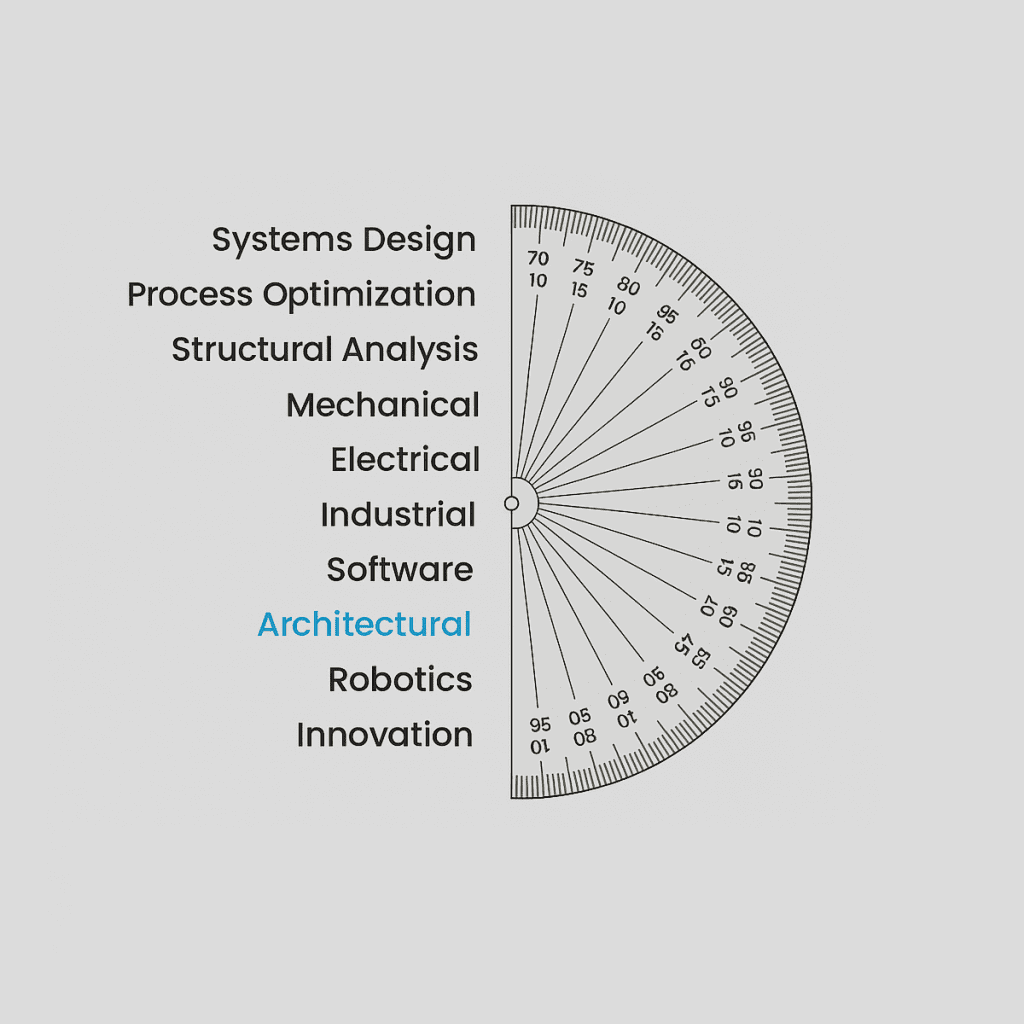
Engineering in ALFA is a multidisciplinary dialogue – not a single-discipline monologue.
Engineering in REPCF is not one discipline –
it is a network of disciplines:
architecture
structure
MEP and systems
energy
transport and traffic
landscape
project economics
futures studies
BIM and Digital Twin
risk management
user behavior psychology
and even the sociology of space
In this model, engineering is the result of the interaction of this network.
No discipline operates in a vacuum.
No detail is decided without a holistic view.

PROCUREMENT
Supply as flow architecture and value management
Procurement is the continuation of design – not a separate stage.
In ALFA’s model, Procurement is not a simple purchasing operation.
It is the phase that converts design into flow.
A flow that:
- is fed by the decisions of Engineering
- is rooted in the analysis of R
- and is directed by the project’s economic model
Therefore, in ALFA, P is not “buying”;
it is the design of the resource flow.

In the traditional view, procurement means buying equipment, materials, labor and related contracts.
In ALFA’s view, procurement means choosing the right values for the project.
It’s not just about price.
Key factors include:
- performance
- life cycle
- risk
- speed
- future compatibility
- integrability
- maintainability
- and alignment with the economic model
Procurement in ALFA is essentially value engineering across the supply chain.
Even if the design from E is flawless,
a wrong procurement strategy in P can collapse the entire project.
So in ALFA, procurement is not a support function;
it is a strategic pillar of execution assurance.
Every procurement decision is a decision about the project’s path.
In ALFA, procurement is not based only on past data or the current market.
We select items that:
- are future-ready
- reduce life-cycle risks
- are compatible with emerging technologies
- can generate value in the operations phase
- and become part of the project’s ecosystem
P is therefore a prediction and selection of the future.
In ALFA, procurement is not static and linear.
It is a dynamic system:
- it flows
- it breathes
- it has inputs and outputs
- it slows down and accelerates
Procurement becomes a living system –
not a shopping list, but a decision matrix and flow engine.
Procurement in ALFA is a powerful risk management tool.
Because it directly shapes:
- quality over time
- execution speed
- final cost
- delay risk
- operational stability
- maintenance cost
- and even investment value
P is not a ceremonial function –
it is the king of risk management.
In typical models, purchase = transaction.
In ALFA, Procurement means:
- negotiating for quality
- negotiating for time
- negotiating for the project’s future
- negotiating for client rights
- negotiating to reduce dependency
- negotiating for standardization
- negotiating for value added
This is negotiation to build the future, not just to buy items.
In ALFA, a supplier must align with:
- the identity of the project
- the goals of the project
- the project’s future trajectory
- and ALFA’s standards
We do not choose suppliers who merely “deliver.”
We choose suppliers who participate.
At this stage:
- suppliers
- manufacturers
- technical consultants
- specialists in different fields
- sub-contractors
- and related stakeholders
all enter a procurement ecosystem,
not a one-way pipeline.
This ecosystem is agile, adaptive, dynamic and manageable.
In ALFA Procurement, we standardize:
- materials
- components
- equipment
- systems
- brands
- technical nodes
- delivery mechanisms
This makes the project:
- controllable
- monitorable
- auditable
- and maintainable
Standardization is the main tool for reducing ambiguity and increasing quality.
In ALFA, P is never rushed.
It is executed with the same precision as Engineering.
Contrary to the common habit of pushing procurement into the execution phase,
ALFA treats it as part of the project’s macro design.
Result?
An execution phase that advances without crisis.
P in ALFA is not only about today’s supply;
it is also designed for:
- future maintenance
- emergencies
- resource shortages
- regulatory changes
- market volatility
- and the entire life cycle of the project
P thus becomes a mechanism of resilience for the project.
Procurement in ALFA is a combination of:
- project management
- economics
- law and contracts
- negotiation
- industrial relations
- logistics
- strategy
- and futures thinking
This makes P a multidimensional core,
not just a support department.
Procurement is the bridge between engineering decisions and execution reality
Procurement is where the decisions taken in E become:
- materials
- systems
- equipment
- contracts
- human resources
- and operational flows
P is the link between the technical world and the world of construction and execution.
The ultimate output of Procurement is assurance of proper execution
By the end of P, ALFA delivers to the project:
- a standardized supply chain
- solid contracts
- verified resources
- a logistics system
- reliable suppliers
- a value–risk model for every choice
- a full architecture of supply flows
- and the operational backbone for construction
P is the foundation of Construction.
Final summary: Procurement in ALFA = engineering of flow, value and future.
In ALFA’s view, procurement is neither a shopping process nor a bureaucratic step.
It is the architecture of value flow.
P ensures that the project is on the right track in terms of:
- time
- cost
- quality
- future
- and executability
That is why Procurement, in the REPCF model, is a core stage –
on the same level as design, construction and finance.

CONSTRUCTION
Construction as the embodiment of rationality, flow and project command
Construction is the moment when the mental world collides with the physical world
In ALFA, Construction is where all the decisions of R, the designs of E, and the flow architecture of P hit reality.
Here, space, matter, energy, time and people all meet at one point.
Construction is not a site operation, It is the event of definition, design, economics and future taking physical form.
In ALFA’s approach, Construction is a management function that:
- controls phases
- manages time
- orchestrates the supply flow
- guarantees quality
- neutralizes risk
Construction is not a passive process.
It is an active, intelligent, multi-dimensional command operation.
An error in design can be revised.
An error in management can be corrected.
But an error in construction strikes directly at:
- time
- money
- quality
- safety
- and project value
Therefore, in ALFA, Construction is based on:
- correct definition
- precise design
- and intelligent procurement
The goal is that errors never occur, rather than being fixed later.
Every single day on site:
- shifts the direction of the project
- creates or destroys value
- reduces or increases risk
- affects economic indicators
In ALFA’s model, construction is a continuous decision-making system,
not a mechanical repetitive activity.
Many projects are dependent on specific people –
and collapse when those individuals change.
In ALFA, Construction is based on Systemized Construction Management:
- reporting systems
- quality control systems
- supply systems
- scheduling systems
- cross-disciplinary coordination systems
- risk management systems
- rapid decision-making systems
As a result, the project does not depend on one person or one contractor –
it depends on a living system.
In ALFA, Construction is the place where:
- architecture
- structure
- MEP
- supply
- technology
- planning
- economics
- standards
- and future-readiness
all experience real-world coordination.
Construction is the execution of the entire project world in real time.
In ALFA, the site is not just a location;
it is a flow of:
- quality
- information
- decisions
- supply
- human resources
- materials
- time
Successful construction means managing flows,
not just managing space.
In ALFA’s view, time is the most expensive resource in a project.
Construction is not only about managing work;
it is about managing project time.
Every minute of construction has value,
and each time error hides huge costs.
Construction in ALFA means creating time, not consuming it.
In typical projects, quality is maintained by supervision.
In ALFA, quality comes from:
- correct design
- correct procurement
- correct executability
- correct systems
Quality is the product of a process, not of a “checklist.”
Good construction produces quality, it doesn’t just inspect it.
In ALFA’s Construction, every action on site is analyzed:
- Is this method lower-risk?
- Does this equipment reduce time?
- Is this activity future-ready?
- Is this decision economical?
Construction here is not “fighting risk”;
it is removing risk through smart operational design.
Construction is not just machinery, concrete, steel and devices.
In ALFA, it is also:
- team
- processes
- organization
- culture
- communication
- shared language
- command system
Construction becomes a human–managerial performance,
not just physical work.
In ALFA, buildings, structures and spaces are not the end product;
they are the physical expression of a definition.
- R has defined “what must be”
- E has defined “how it must be”
- P has defined “with what it must be”
C now converts all of this into reality.
In ALFA, construction is carried out such that:
- future expansion is possible
- future-building infrastructure is already embedded
- system upgrade capacity is considered
- the project can take on new roles over time
Construction is not an end;
it is the beginning of operations.
In ALFA’s model, construction runs on:
- fully transparent cost flows
- traceable pathways
- real-time links between decisions and outcomes
- clear reporting systems
Construction is not just “predictable”;
it is controllable.
In ALFA, crises are removed before they appear.
Construction is designed around:
- processes
- standards
- risk models
- supply flows
- execution architecture
Thus the project exits the world of “crisis management”
and enters the world of “crisis prevention.”
The output of construction is not just a building; it is a system ready for operation.
At the end of Construction, ALFA delivers:
- fully tested systems
- execution documentation
- complete quality control records
- a maintenance model
- an operational structure
- and professional handover of the project
Construction in this model means delivering a living system, ready for the future.
Final summary of Stage C for the ALFA website
Construction in the REPCF model is not a site operation;
it is the collision of the mental world with the real world.
It is where definition, design and procurement, as a single integrated system,
take physical form.
Construction in ALFA is the management of flow, quality, time, value and risk –
the command of the project in a live, dynamic field.
C is not the building of a structure; it is the building of a future.
Final summary: Procurement in ALFA = engineering of flow, value and future.
In ALFA’s view, procurement is neither a shopping process nor a bureaucratic step.
It is the architecture of value flow.
P ensures that the project is on the right track in terms of:
- time
- cost
- quality
- future
- and executability
That is why Procurement, in the REPCF model, is a core stage –
on the same level as design, construction and finance.

FINANCE
Financial architecture, capital engineering and securing the project’s future
A project becomes real only when its capital is real
In ALFA’s model, Finance is not just about bringing in money;
it is about architecting capital.
F is the stage that transforms the project from a definition, a design or a structure
into a sustainable economic reality.
This stage ensures that the project can:
- start
- continue
- be operated
- and remain sustainable
without suffering from liquidity crises or flow stoppages at any point.
No matter how precise R is,
how strong Engineering is,
or how professional Procurement and Construction are,
without a proper financial system the project remains just an idea, not a reality.
Finance in ALFA is the circulatory system of the project.
Unlike the traditional view where finance = money,
in ALFA, finance = the financial system of the project:
including:
- investment model
- cash flow model
- value creation model
- ownership model
- partnership model
- financial risk model
- operation model
- financial maintenance model
F is a system, a structure, a full financial architecture.
Every financial decision transforms the project’s world:
- type of investor
- liquidity strength
- future development capacity
- revenue model
- risk level
- speed of execution
- project scale and reach
Finance in ALFA is part of strategic decision-making,
not a secondary back-office function.
In ALFA, finance is designed around the future of the project, not just current needs.
Core questions:
- Is this capital enough for today?
- What about five years from now?
- What is the return model?
- How is value created?
- How will the project scale?
- How does capital create long-term stability?
This turns finance from “bringing money” into the architecture of the project’s economic future.
Finance is not about having capital;
it is about having a continuous, controllable, future-proof cash flow.
A strong financial flow ensures the project:
- does not stop
- does not incur long delays
- avoids financial crises
- creates value
- and stays resilient through economic turbulence
F = cash flow, not cash storage.
In ALFA, financiers are not just banks or investors.
Anyone who joins the project is:
- a risk partner
- a future partner
- a development partner
- and a partner in the project’s mission
Choosing a financier is therefore choosing a partner in the project’s future.
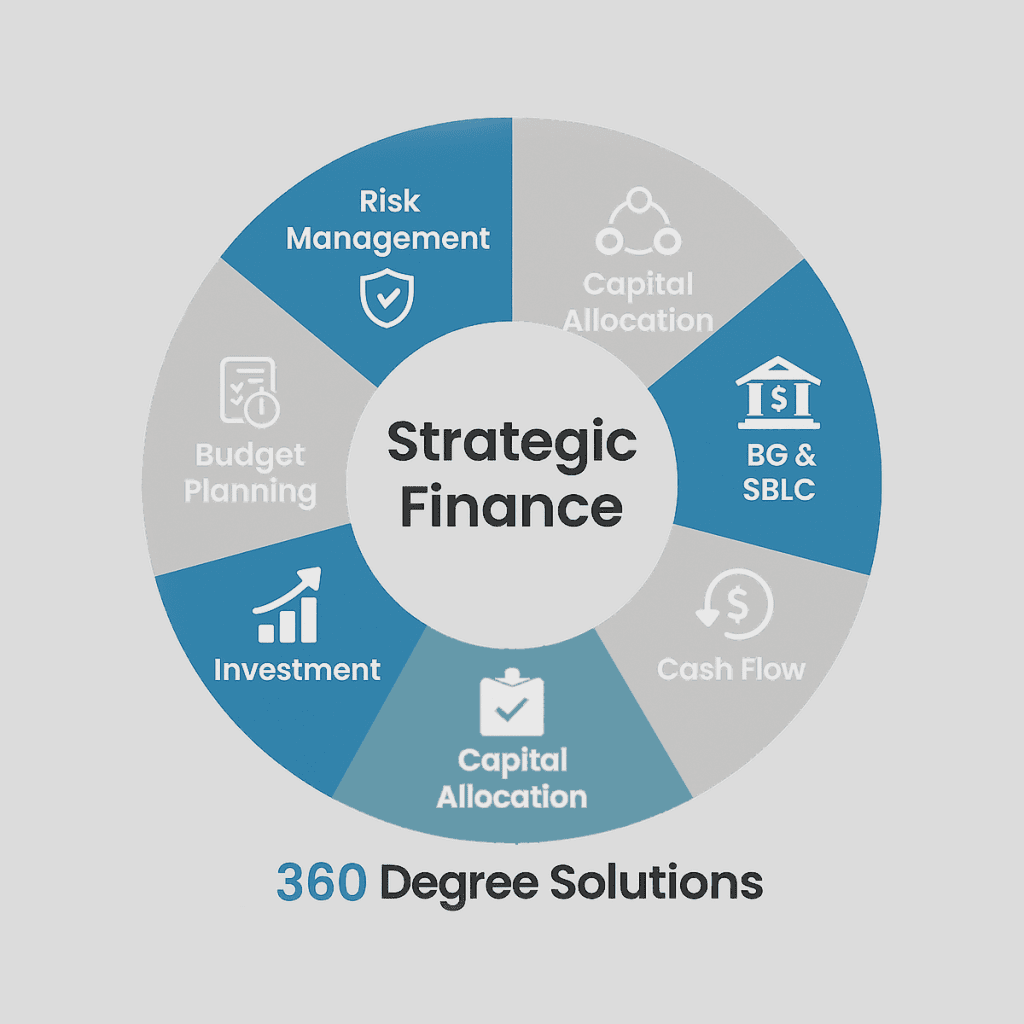
ALFA can arrange international financial guarantees such as:
- Bank Guarantees (BG)
- Standby Letters of Credit (SBLC)
- Proof of Funds (POF)
- Irrevocable Payment Guarantees
These instruments:
- multiply the project’s liquidity power
- reduce financial risk
- increase the project’s credibility with banks and contractors
- unlock large international project opportunities
At this point, ALFA is no longer just a consultant –
it becomes a Funder & Facilitator.
In ALFA, BG and SBLC are not only used for guarantees;
they are used to create new financial flows.
These instruments can:
- turn non-economic projects into viable ones
- accelerate execution
- boost stakeholder confidence
- activate external financing
- and internationalize the project’s structure
BG and SBLC equal financial negotiation power and influence.
In F, we analyze and structure:
- currency risk
- liquidity risk
- scheduling risk
- cost escalation risk
- foreign financing risk
- repayment risk
- credit and reputation risk
Finance in ALFA is not just about providing funds;
it is about eliminating risk via an intelligent financial structure.
Because ALFA can:
- leverage BG
- provide SBLC
- attract investors
- design economic models
- manage financial risk
- structure partnership models
projects that once looked financially impossible become feasible and executable in ALFA’s model.
Finance is not the final stage; it is the engine of operations.
In REPCF, F is not only for construction; it is designed for:
- operation
- maintenance
- future expansion
- using the project as a productive asset
Thus, the project becomes a continuous value-creation machine.
The output of Finance is not just capital; it is confidence.
At the end of F, ALFA delivers:
- a complete financial model for the project
- a forecast cash flow
- a financing strategy
- guarantee instruments
- a legal–financial structure
- a participation/partnership model
- and an investment roadmap for the future
These outputs make the project robust, executable, scalable and trustworthy.

- Final summary: Finance in ALFA = engineering the economic future of the project.
In the REPCF model, Finance is neither accounting nor just raising funds.
It is the architecture of financial flows, risk management, trust creation, capital activation and future-building for the project.
In this stage, ALFA is not just an advisor;
it acts as financier, guarantor and enabler of the project.
F is the stage that takes the project from “being built”
to “having an economy” –
and from mere “realization”
to “long-term sustainability”.